
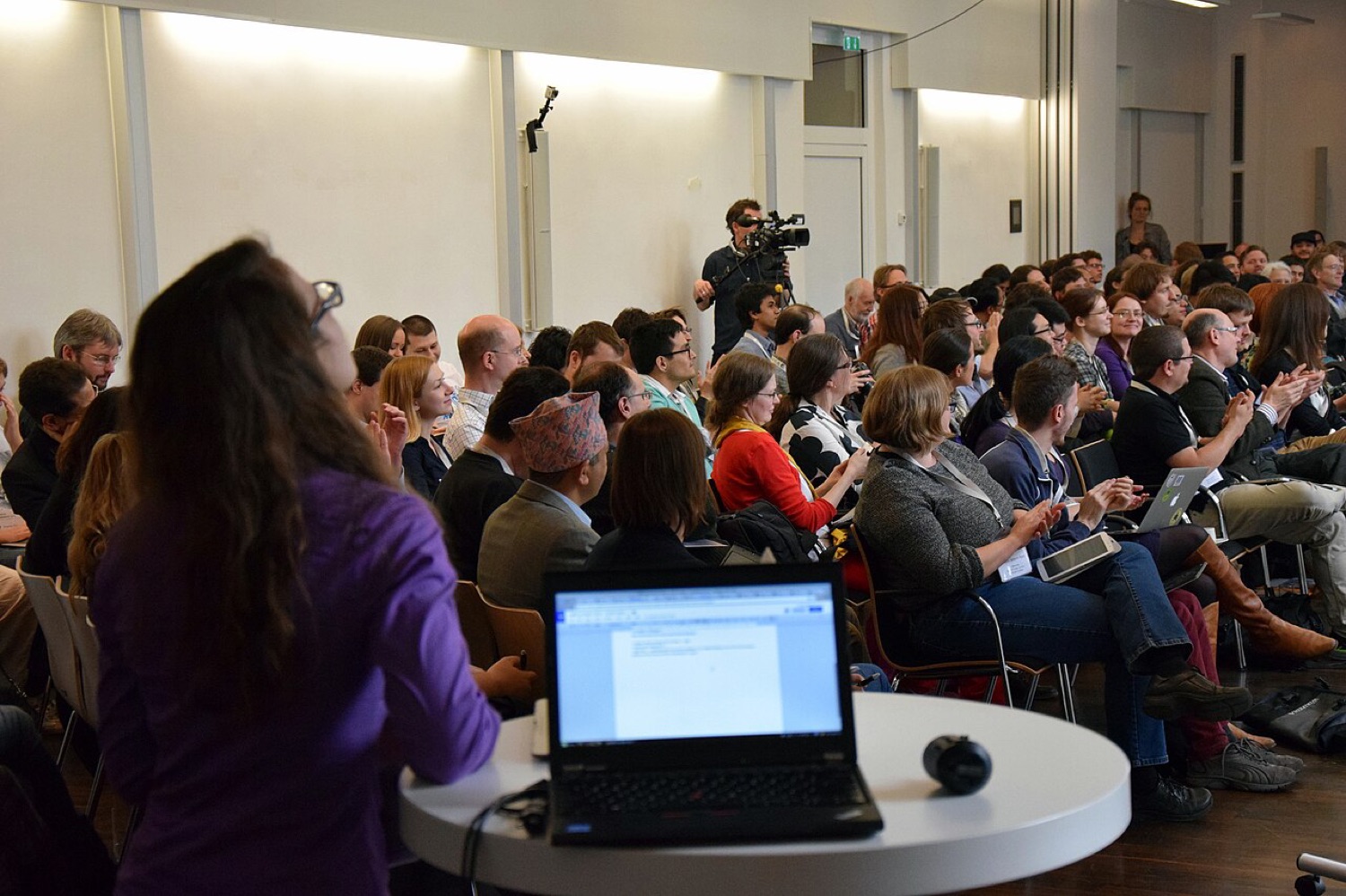
Picture a typical company town hall. In the front row sits a senior leader approaching retirement who still prints the slides. Behind them, a Gen X manager is half-listening while watching for messages from their team. A millennial director is taking notes on a tablet, and a group of Gen Z graduates near the back are quietly checking whether the deck has been shared in the team channel. All of them are your audience, and each of them is judging your presentation by slightly different standards.
Presenting to four generations at once is now the norm in many workplaces. The good news is that it does not require four different presentations. It requires one well-built presentation that respects the different ways people take in information.
Know who is in the room
Generational differences are broad tendencies, not rules, and plenty of people defy them. Still, a rough picture helps when planning:
| Generation | Often appreciates | Often tunes out when |
|---|---|---|
| Baby Boomers | Context, credibility, a clear narrative | Jargon piles up or slides move too fast |
| Gen X | Directness, practical takeaways, no fluff | The talk feels like a sales pitch |
| Millennials | Purpose, collaboration, visible authenticity | Messages feel top-down and unexplained |
| Gen Z | Brevity, visuals, honesty, personal relevance | Long text slides and vague promises appear |
Notice how much overlap there is. Clarity, honesty and relevance appeal to everyone. Generational awareness mostly helps you avoid the specific habits that lose one part of the room.
Attention: design for the shortest span, reward the longest
Attention in any audience fluctuates, regardless of age. Plan your talk in segments of a few minutes each, with a clear change of pace between them: a story, a question, a short video, a chart, a moment of discussion. That rhythm keeps people who are used to fast-moving content engaged, while those who prefer depth can follow a coherent thread across the segments.
Open with the point. Tell the room in the first minute what you are going to talk about and why it matters to them. Everyone appreciates knowing where a presentation is going, and younger audiences in particular will decide very quickly whether to invest their attention.
Slides: fewer words, more meaning
- Use one idea per slide and make the headline a sentence that states the point.
- Keep text large and minimal; older eyes and phone-sized screens both benefit.
- Prefer simple charts to dense tables, and label them in plain language.
- Share the deck afterwards so nobody needs to photograph every slide.
- Include a short written summary for those who like something to file.
Accessible design is not a courtesy for one generation. It is better design for every generation.
Stories: bridge the age gap
Stories are the most reliable way to connect a mixed audience. The trick is choosing stories that more than one generation can recognise. A tale about the early days of the company might delight long-serving staff and leave new joiners cold unless you connect it to something happening now. Similarly, a story built on a recent social media trend might baffle part of the room.
Consider pairing stories: one from experience, one from a younger colleague, both making the same point. It signals that wisdom flows in both directions and that everyone's perspective counts. Where possible, bring the people themselves on stage for a minute; a short exchange across generations often lands better than any slide.
The most persuasive thing a presenter can do in a mixed-age room is show that they have listened to all of it.
Q&A: make it safe for everyone to ask
Traditional open-microphone question sessions often favour confident, senior voices. Younger employees may hold back, worried about asking something naive in front of leaders. A few adjustments can broaden participation:
- Collect questions anonymously through a simple digital tool during the talk.
- Invite questions from different parts of the room deliberately.
- Start by answering one question you know younger staff are asking.
- Repeat each question before answering so everyone hears it.
- Promise to follow up on anything you cannot answer, then actually do it.
Asking the audience a question of your own early on also helps; it signals that this is a conversation rather than a lecture. We look at how to choose those questions in the power of the question.
Bring it together
Presenting to four generations is less about generational tricks than about disciplined communication: a clear message, a varied rhythm, honest stories and a genuine invitation to respond. Do those things well and the retiring executive, the busy manager, the purpose-driven director and the graduate at the back will all leave with the same thing, which is a sense that the time was well spent and the speaker took them seriously.


