
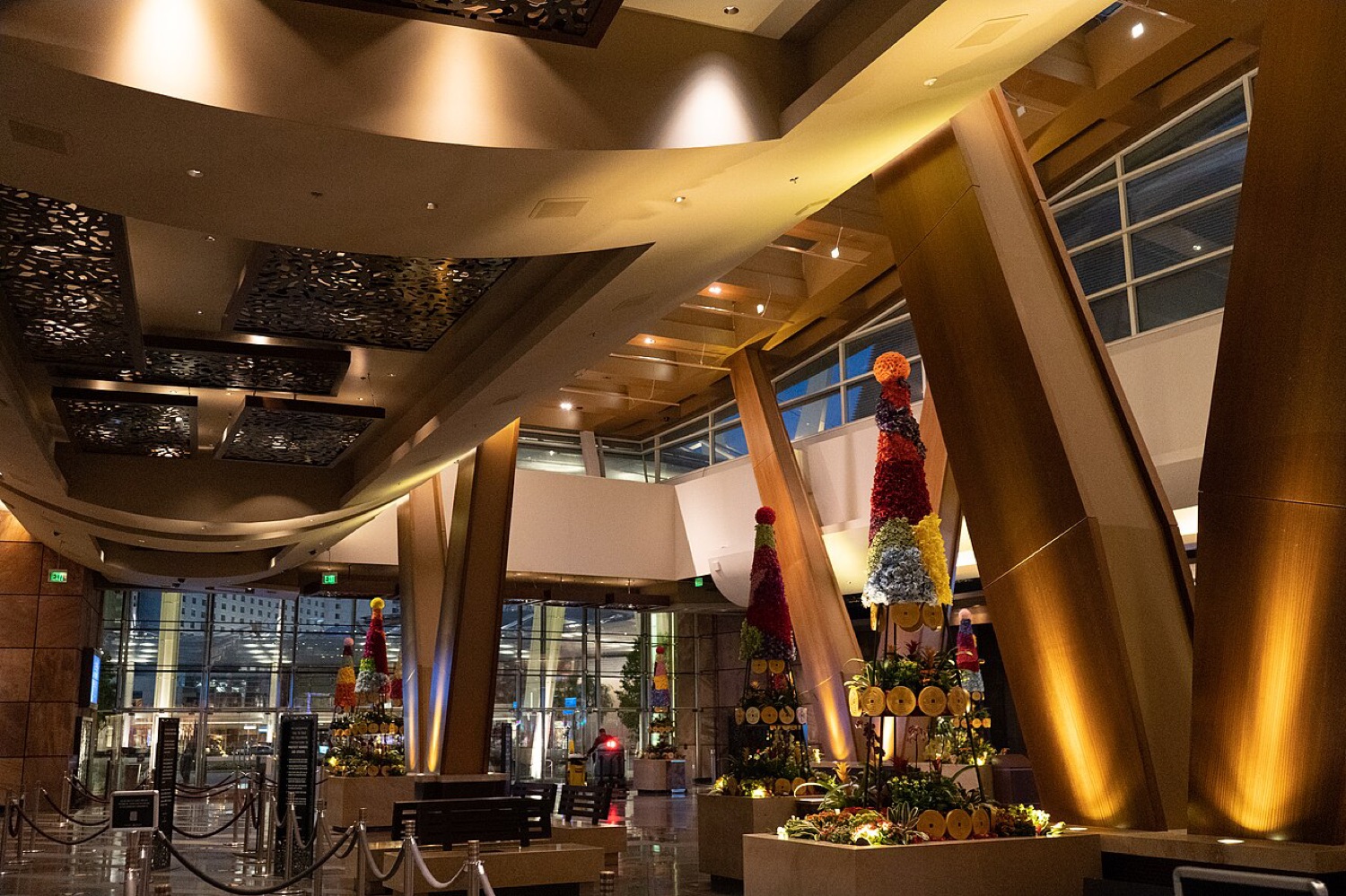
Walk into any large casino resort and within minutes someone will offer you a players' card. Sign up and you join a system that has been refined over decades to answer one question: how do we make people feel valued enough to come back? Managers spend large budgets on engagement surveys asking much the same thing. It is worth looking at how the casino industry approaches it, and also at where the comparison falls apart.
How casino loyalty programs work
Modern players' clubs share a common structure, whether at a regional casino or a major resort on the Strip.
- Tracking. Insert your card into a slot machine or hand it to a table-games supervisor, and your play is recorded: time, average bet and game type.
- Points and tiers. Activity earns points, and points move members through named tiers, often with metal or gemstone names, each unlocking better benefits.
- Comps. Short for complimentaries, comps range from free drinks and meal credits to discounted or free rooms, show tickets and travel. They are typically based on a player's expected value to the casino, not on whether they won or lost on a given night.
- Hosts. Frequent guests may be assigned a casino host, a relationship manager whose job is to know their preferences, remember their birthday and make each visit feel personal.
Licensed online casinos have adapted the same model with VIP schemes, reward points, cashback offers and dedicated account managers for regular players. The channel changed; the psychology did not.
Five lessons for managers
1. Recognition is specific
A good host does not say "thanks for being a valued guest". They say "your usual table is open, and we saved the suite you liked last time". Specific recognition shows that someone has paid attention. Generic praise in a team meeting carries a fraction of the weight of a manager who names exactly what an individual did and why it mattered.
2. Progress should be visible
Tiers work because members always know where they stand and what the next level requires. Many employees, especially early-career millennials and Gen Z, say they lack exactly that clarity about their own growth. Transparent career frameworks, skills milestones and regular conversations about progress do for staff what a tier card does for a guest.
3. Rewards should match the person
Casinos personalise comps relentlessly: one guest values a spa day, another a steakhouse table, a third tickets for the family. Managers often default to one-size-fits-all rewards. Asking what each person actually values, whether that is flexibility, learning budgets, visibility or time off, is the core of the approach we describe in what's in it for them.
4. Someone should know your name
The casino host may be the industry's most effective invention. A single person who owns the relationship turns a giant resort into something that feels human. In organisations, that role belongs to the direct manager. Holding regular one-on-ones, remembering what people told you last time and following up on it is host behaviour.
5. Surprise beats schedule
Unexpected upgrades create stronger memories than predictable perks. An unprompted afternoon off after a big delivery, or a handwritten note, lands harder than the annual awards dinner.
Where the analogy stops
Borrowing ideas from casinos is useful only if we are honest about the differences.
First, a casino's loyalty program is built on a known mathematical edge. The house expects to come out ahead over time, and the rewards are funded from that expectation. Guests accept this openly, because they are paying for entertainment. The employment relationship should be closer to a fair exchange in which both sides genuinely gain. If engagement tactics are designed only to extract more effort without returning value, people notice quickly, and younger workers in particular will leave.
Second, players choose to visit a casino for fun. Employees come to work for a livelihood, meaning and growth. Points and badges can decorate a good job; they cannot replace one. No tier status compensates for unclear goals, poor management or unfair pay.
Third, comps reward activity. In knowledge work, activity is a poor proxy for value. Rewarding hours logged or messages sent risks encouraging exactly the wrong behaviour. Recognition at work should follow contribution and outcomes, along with the quality of the decisions behind them.
We think the best lesson from the casino floor is not the points but the host: someone who notices, remembers and makes each person feel expected.
Putting it to work
You do not need a rewards platform to apply these ideas. Start with a simple audit of your team. Does each person know where they stand and what comes next? Do you know what each of them values most? When did you last recognise someone in a way that only they could have earned? Who on the team would say their manager really knows them?
Casinos have spent decades learning that people return to places where they feel seen. That insight belongs to every workplace. The difference is that, at work, the goal is not to keep the house ahead, but to make sure everyone at the table is better off for having been there.


